AI Governance by Design

AI governance, from someone who builds AI.

I help organizations adopt AI they can explain, audit, and defend.

I am Daniel S. Demoz, an AI governance practitioner in Toronto. I write AI policy, assess AI risk, and review AI vendors against frameworks like NIST AI RMF, OSFI E-23, and PIPEDA. I also build machine learning systems, so my governance work starts from how models really behave.

Frameworks NIST AI RMF OSFI E-23 PIPEDA Quebec Law 25 Directive on Automated Decision-Making
Daniel S. Demoz
Daniel S. DemozToronto, Canada
Evidence-Based AIMy book on AI governance and Canadian AI regulation
2 SSRN papersOn human oversight and AI governance maturity
24 collegesReviewed for AI governance maturity in my Ontario study
23M recordsA governed data pipeline: every flag traceable to its source

What I do

Governance built on technical depth.

My work is AI governance. The goal is simple: people can explain what an AI system does, show that it works, and stay accountable for the result.

01Now

Governing AI

AI policy, risk, and oversight

I help organizations set AI policy, assess risk, review AI vendors, and design human oversight that works in practice. I wrote Evidence-Based AI, published two SSRN papers on oversight and governance maturity, and am working toward the IAPP AI Governance Professional (AIGP) certification.

What it gives organizations: AI they can explain, audit, and defend.
02

Building AI systems

Machine learning and applied AI

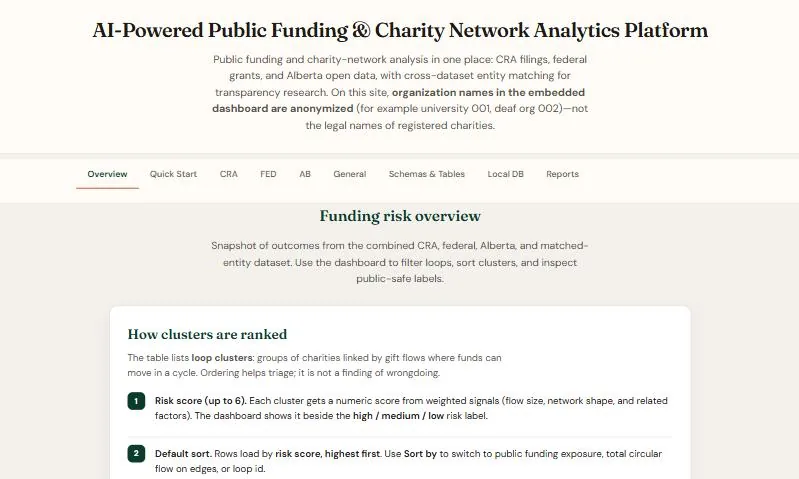
I build machine learning systems end to end: entity resolution, language model pipelines, forecasting, and validation. At the University of Ottawa, I led a team of four that resolved 23 million public funding records into about 851,000 organizations, and I wrote the matching, language model, and validation stages.

PythonSplinkSQLLLM APIs

What it gives my governance work: I know where risk enters a real pipeline, because I build them.

03

Modelling and teaching at depth

Predictive analytics, big data, and visualization

I have taught neural networks, predictive modelling, big data analytics, and data mining at the postgraduate level. I have also delivered advanced statistical and predictive work for clients, including a lead-scoring model for a real estate firm.

Neural networksPredictive modellingSASPower BI

What it gives my governance work: I can test a model's evidence, and I know when a strong number hides a weak result.

04

The research foundation

Social and management research

My training began in social and management research, with a master's in development management (First Class Honours) and field research in international development.

What it gives my governance work: I ask who is affected by an AI decision before I ask how accurate the model is.

Selected work

Governance principles, applied to real systems.

Each project is labelled by its actual status and scope.

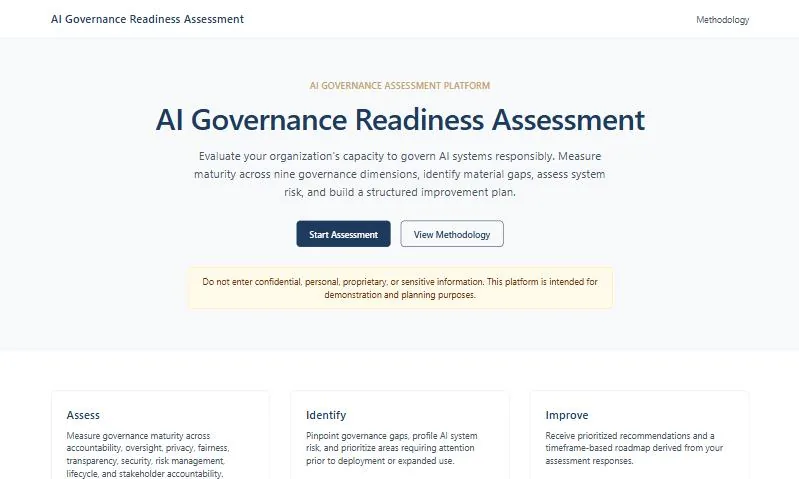
Screenshot of the AI Governance Readiness Assessment

Independent prototype

AI Governance Assessment

Measures governance maturity across nine dimensions, including accountability, privacy, fairness, and security. It returns the main gaps, their priority, and a roadmap.

Governance focus: clear criteria and a practical improvement plan.

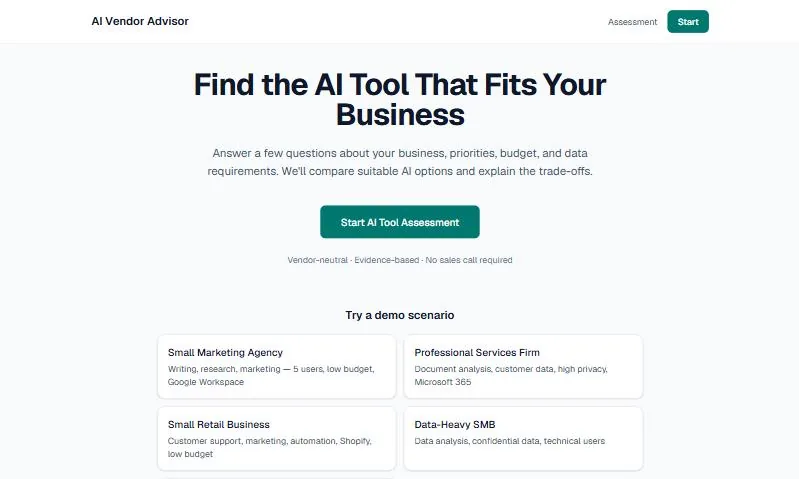
Screenshot of the AI Vendor Selection Advisor

Independent prototype

AI Vendor Selection Advisor

Helps smaller organizations compare AI tools against their needs, budget, data, and governance requirements.

Governance focus: documented trade-offs, not a single unexplained answer.

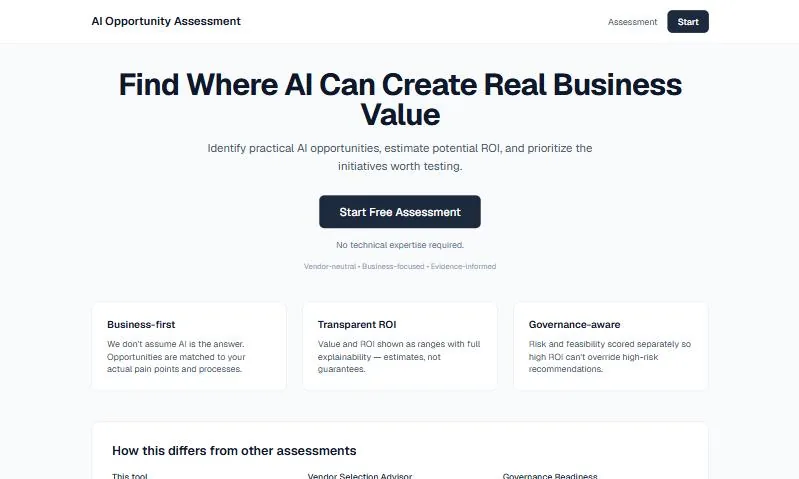
Screenshot of the AI Opportunity and ROI Assessment

Independent prototype

AI Opportunity and ROI Assessment

Ranks possible AI use cases by value, feasibility, and risk. Value is shown as a range, and risk is scored separately, so a high return cannot hide a high risk.

Governance focus: keep expected value apart from uncertainty and risk.

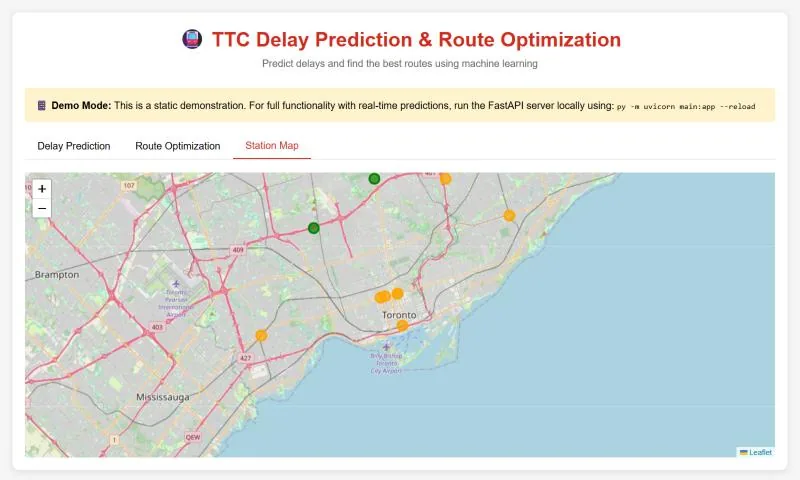
Screenshot of TTC Predict station map

Applied machine learning

TTC Predict

Predicts Toronto transit delays from public data, with route options and a station map.

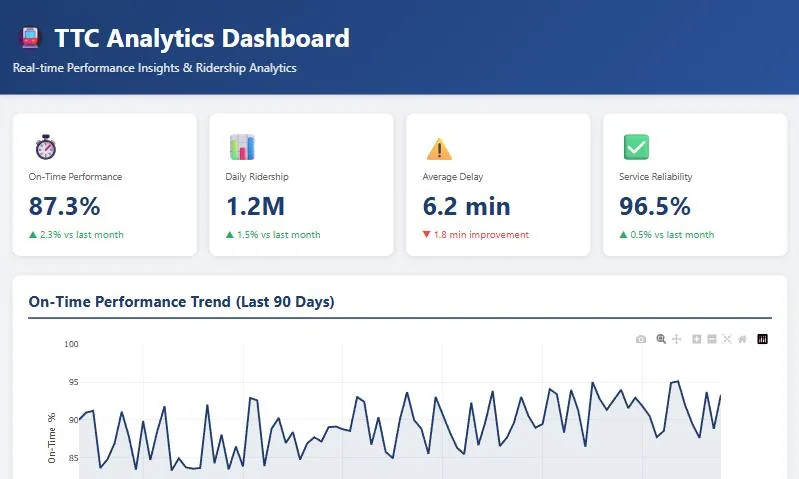
Screenshot of the LoopLens transit dashboard

Data visualization

LoopLens

An interactive dashboard for exploring Toronto transit performance and ridership data.

More technical work

Machine learning and analytics

More projects on GitHub, including NLP, churn, segmentation, SQL, and predictive modelling.

The three AI assessment tools are self-built portfolio prototypes. They are not certified products and do not replace legal advice, independent validation, or a formal compliance assessment.

My method

The Reliable AI Adoption Framework.

I developed this framework to answer six questions before any AI tool is chosen. My book, Evidence-Based AI, sets out the evidence discipline behind it. Each question produces a written record, so every decision can be checked later.

01

Business problem

What outcome needs to improve, and how will we know it has?

OutputProblem statement and success measure
02

Data readiness

What data exists, where does it live, and is it reliable enough to base decisions on?

OutputData inventory and quality check
03

Governance and risk

Which risks and rules apply before anyone relies on the system?

OutputRisk assessment and the rules that apply, such as PIPEDA, Quebec Law 25, or OSFI E-23 for federally regulated financial institutions
04

Technology and tools

What is already in use, what works, and which vendor fits?

OutputVendor review and decision record
05

People and adoption

Who uses the system, who reviews its outputs, and what training do they need?

OutputOversight roles and training plan
06

Outcomes and ROI

What does success look like in numbers?

OutputBaseline measures, then reviews at 30 and 90 days

The framework aligns with the Govern, Map, Measure, and Manage functions of the NIST AI Risk Management Framework.

Typical governance records

AI use-case inventory · risk assessment · control matrix · vendor due-diligence checklist · model or system card · human oversight procedure · approval record · monitoring plan.

Evidence before assurance

Claims need records and tests behind them. A framework mapping or an assessment score alone does not prove that an AI system is safe, fair, lawful, or effective.

Research and writing

Research that informs practice.

My research asks how AI governance and human oversight work in real institutions.

Independent Researcher · ORCID 0009-0006-3072-7309 ↗

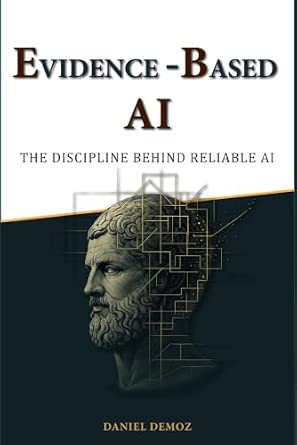
Cover of Evidence-Based AI: The Discipline Behind Reliable AI

Book

Evidence-Based AI: The Discipline Behind Reliable AI

A practical method for AI decisions that hold up, covering governance and alignment with Canadian privacy and AI regulation.

View on Amazon.ca ↗

SSRN working paper · October 2026

Artificial Intelligence Governance Maturity: A Document Analysis of Ontario's Colleges

Reviews AI governance across Ontario's 24 publicly funded colleges.

Read on SSRN ↗

SSRN paper · August 2026

Human Oversight or Automation Bias? Closing a Gap in Canada's Directive on Automated Decision-Making

Looks at where human oversight requirements fall short in practice, and how to reduce automation bias.

Read on SSRN ↗

Selected articles

Human-in-the-loop AI isn't just a checkbox

Why human oversight needs clear limits, real authority, and the power to stop a system.

Read article ↗

AI accuracy is not ROI

A model can be 92 percent accurate and still fail to improve the business.

Read article ↗

From evidence-based practice to evidence-based AI

Applying the discipline of evidence to AI decisions.

Read article ↗

All articles ↗

Experience and education

Where I have worked.

December 2017 to present

Lead Consultant

BRUKD Consultancy, Toronto

  • Advise Canadian small and mid-sized organizations on AI governance, vendor selection, policy writing, and staff training.
  • Developed the Reliable AI Adoption Framework and proof-of-concept assessment tools.
  • Built a lead-scoring model for a real estate firm from its CRM data, delivered in a Power BI dashboard.
February 2021 to present

Part-Time Professor

Seneca Polytechnic · Centennial College · George Brown Polytechnic · Computek College, Toronto

  • Teach AI governance, law, ethics, and social responsibility in software development at Seneca, and designed the course material.
  • Taught big data analytics, neural networks, predictive modelling, and data mining to postgraduate students at Centennial.
  • Teach data management and analytics at George Brown. Developed a six-course business curriculum at Computek.
Earlier experience

Research and program monitoring

International development research and monitoring, including UNDP-funded research on early warning systems for coastal communities.

Education and credentials
Master of Interdisciplinary Artificial IntelligenceUniversity of Ottawa · Average 9.6/10
IAPP AI Governance Professional (AIGP) In progressInternational Association of Privacy Professionals
Master's, Development ManagementKhon Kaen University · First Class Honours
Postgraduate Certificate, Marketing Research and AnalyticsCentennial College · Honours
Teaching and Learning in Higher EducationCentennial College · Certificate
Bachelor of Arts, SociologyUniversity of Asmara

Contact

Let's talk about AI governance.

I am open to roles in AI governance, responsible AI, and AI risk. Email is the best way to reach me.

Toronto, Ontario